
Celebrating over 20 years of community sightings
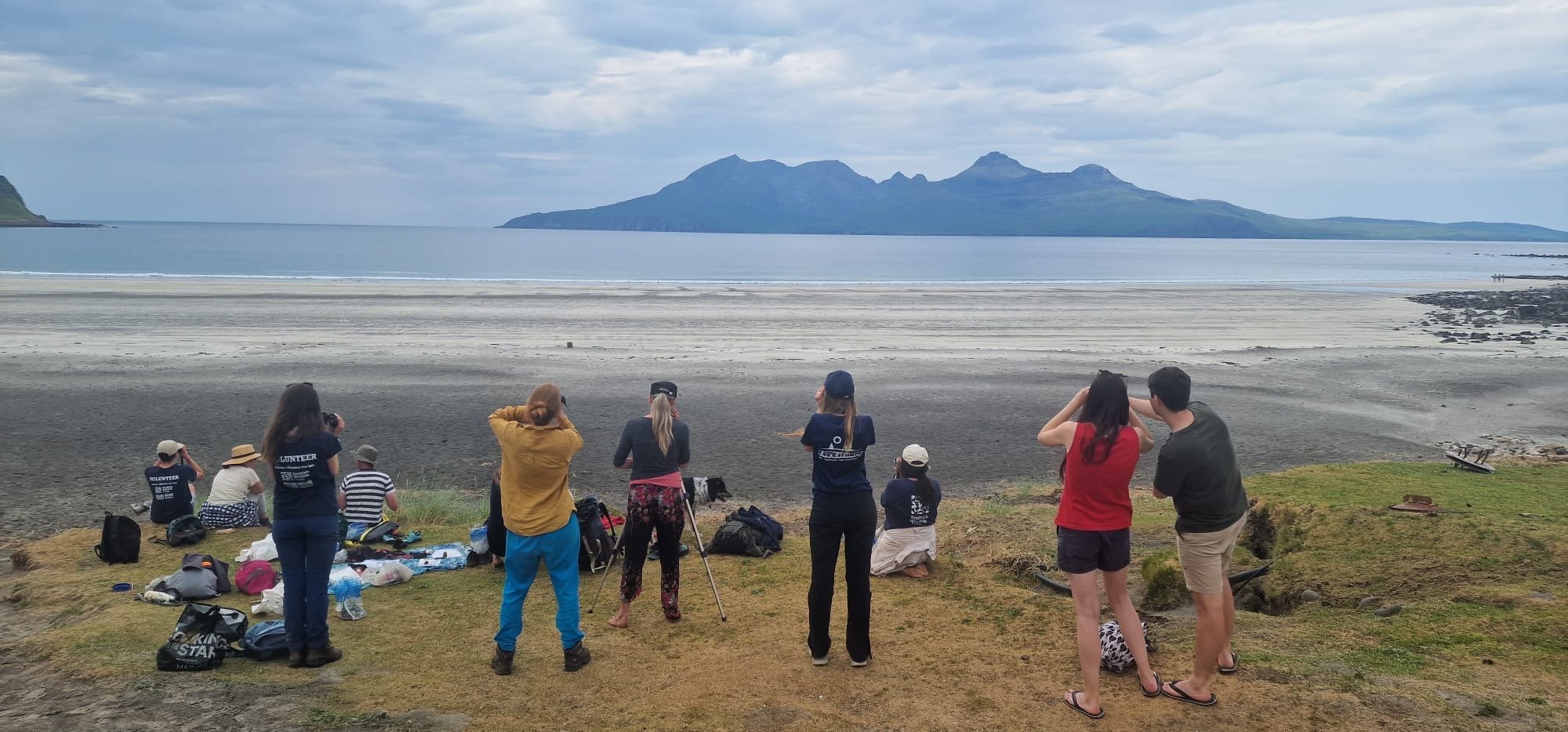
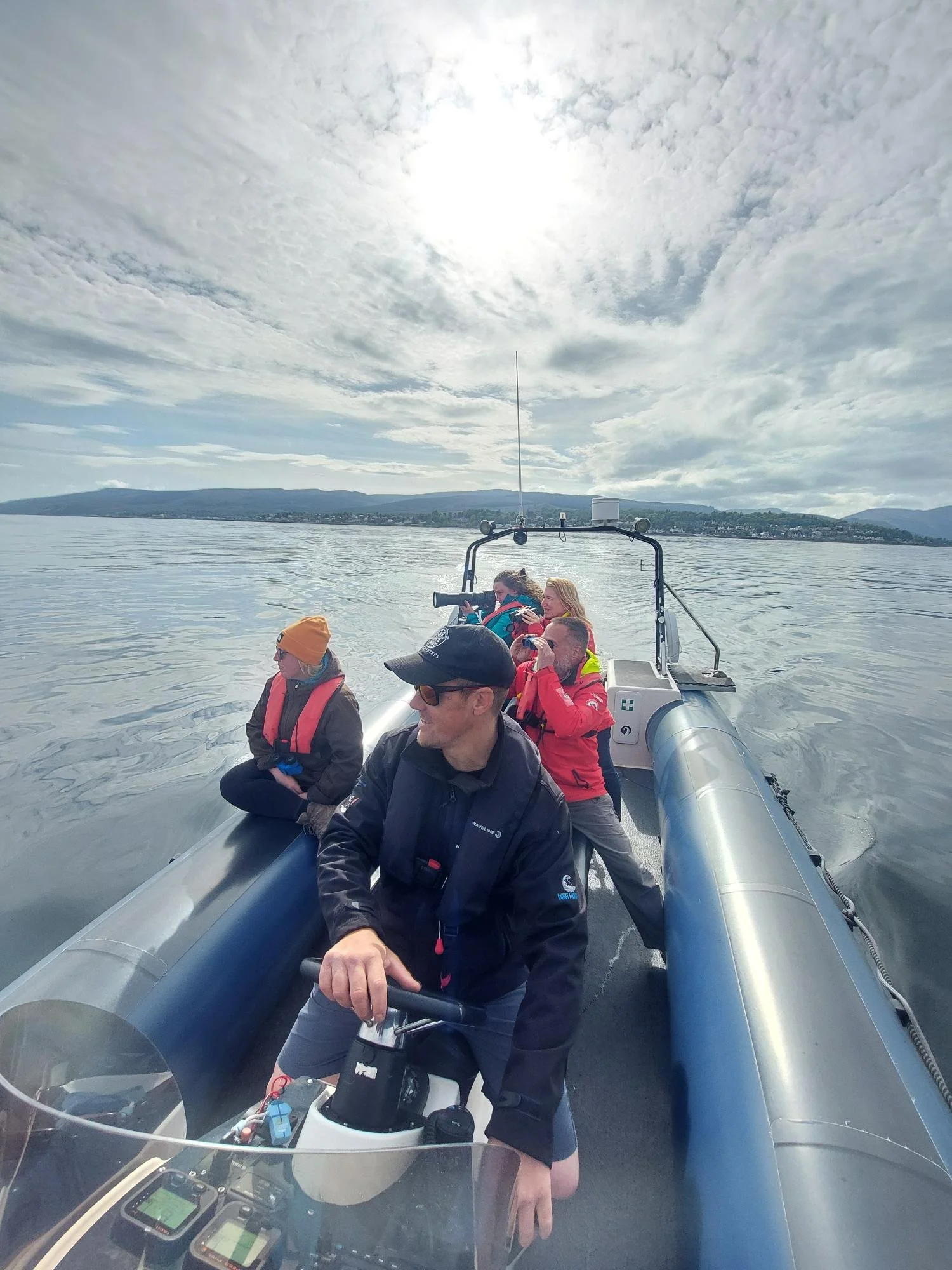
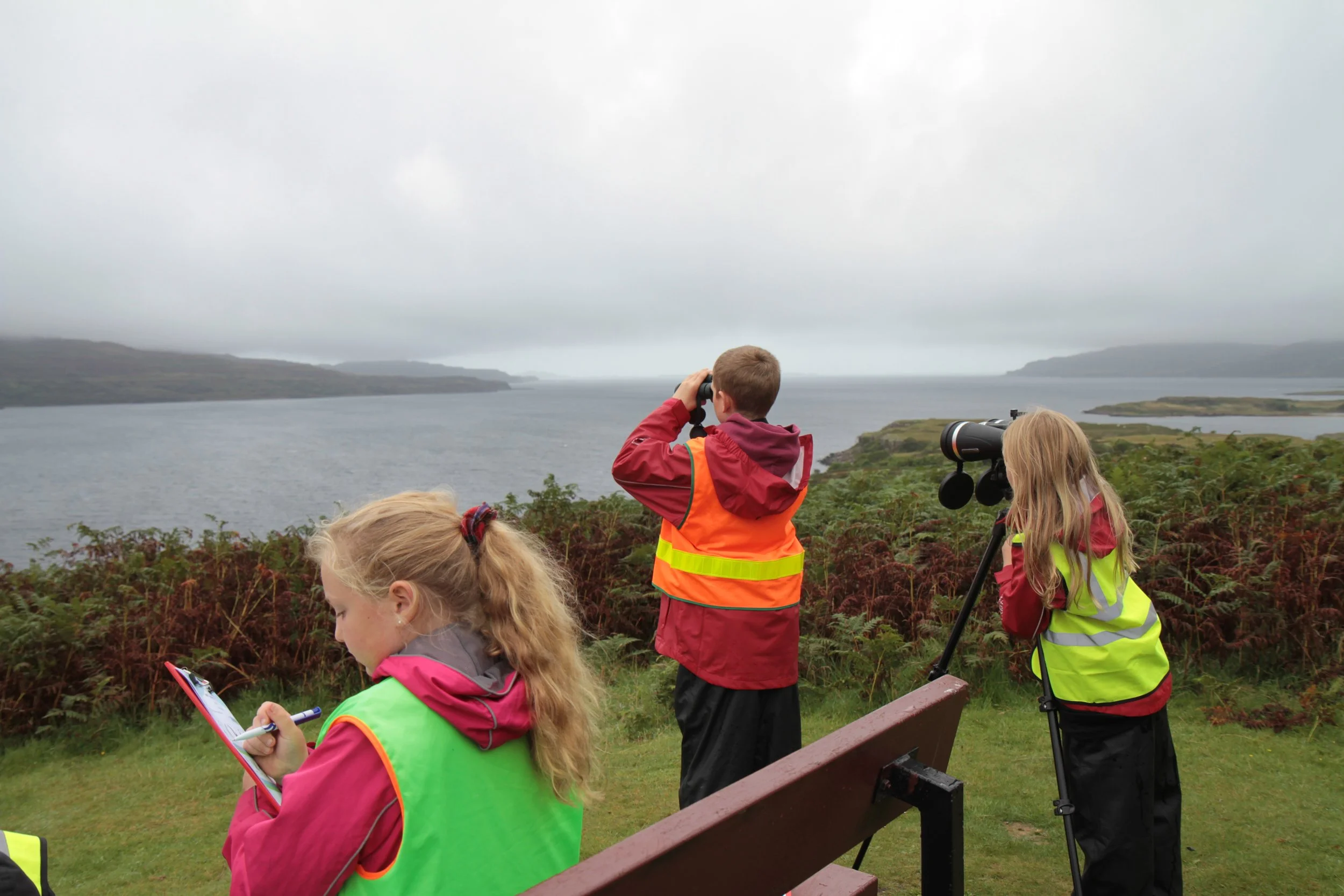
For over 20 years, the Hebridean Whale and Dolphin Trust (HWDT) have been working with communities across Scotland to monitor the species in our seas.
From members of the public, to tour operators - people have been building our understanding of whales, dolphins, porpoises and basking sharks by submitting sightings and photographs through our long-standing community sightings network.
Long term monitoring of cetaceans (whales, dolphins and porpoise) is vital in assessing biodiversity, distribution and seasonal occurrence, which is essential for effective conservation management. These creatures are long-lived and highly-mobile so require a collective effort to record.
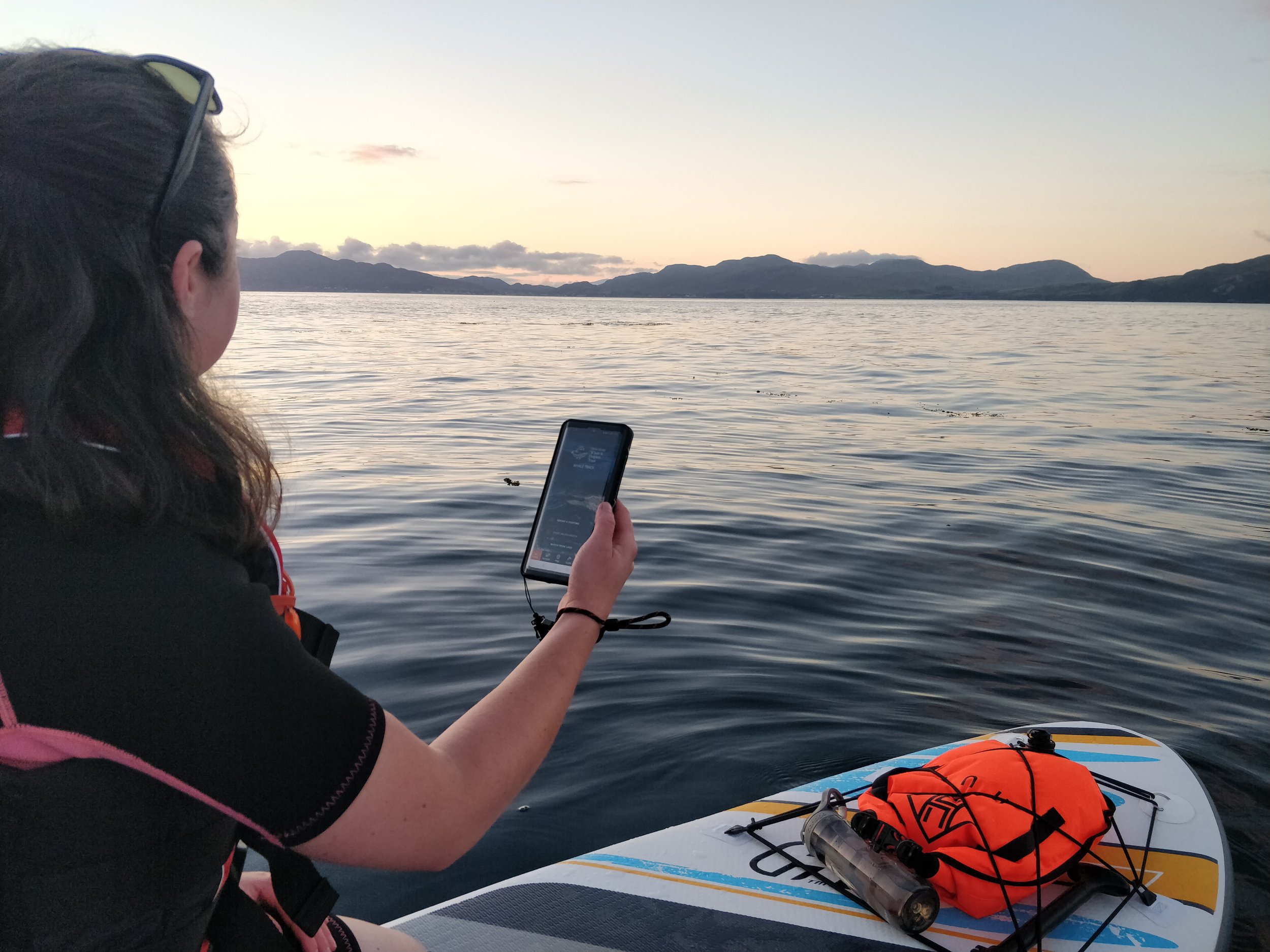
Citizen science projects, such as HWDTs Whale Track, have made conservation accessible to everyone; making reporting sightings and photographs, as well as conducting surveys quick and easy.
With over two decades of collecting community sightings data, we reflect on the progress achieved from the early days of reporting to what is a now an 8,000 strong Whale Track network.
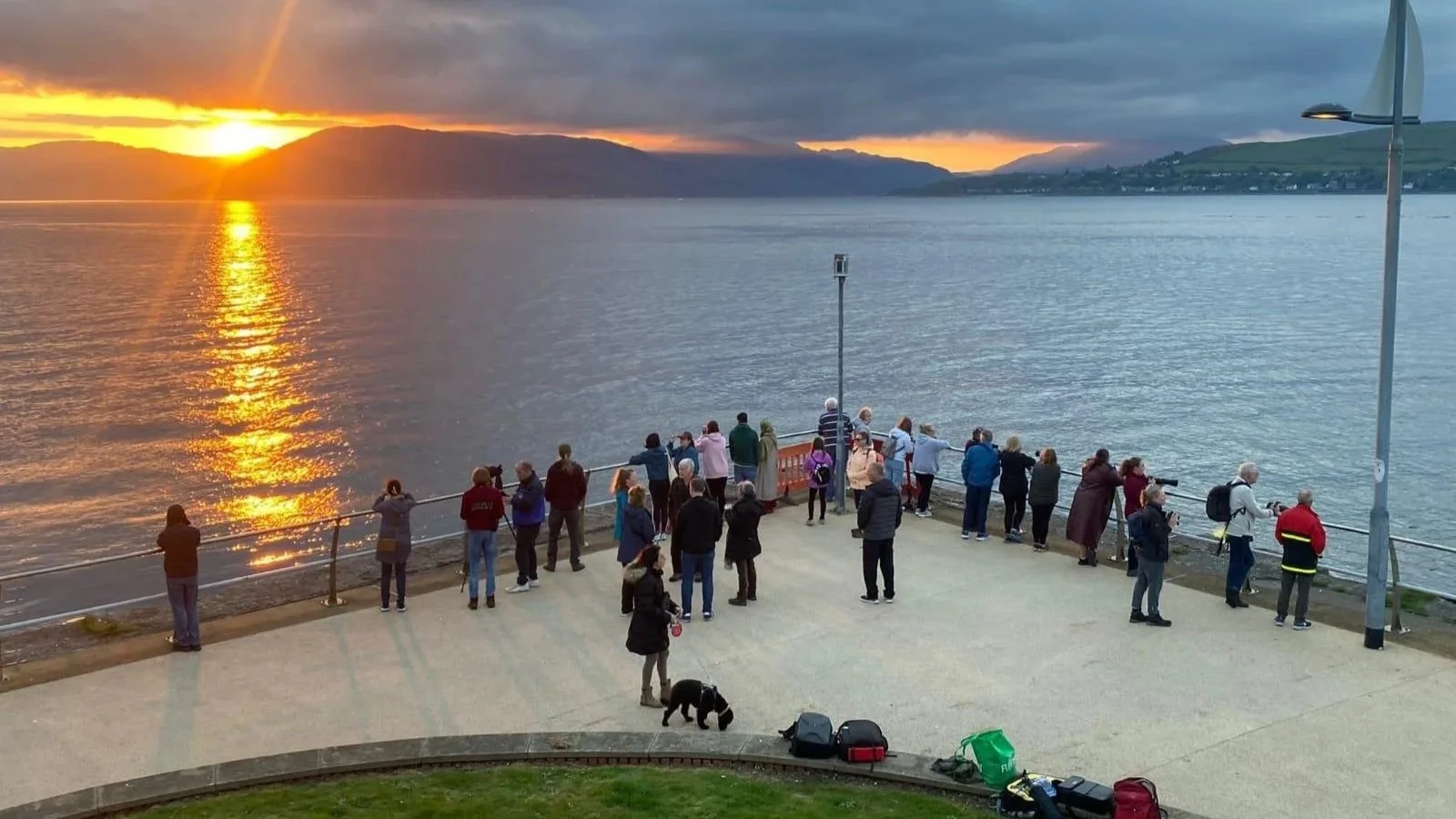
©Paul Ellis
INNOVATION DRIVES CONSERVATION
From 2004 to 2017, HWDT collected sighting reports on paper and web-based forms, with almost 10,000 sightings reported, from an average 236 contributors per year. In July 2017, the pioneering Whale Track smartphone app and website launched, allowing anyone to record effort-based surveys, casual sightings and submit photographs with technology available in their pocket. The Whale Track app was the first of it’s kind and, from the start, adopted a collaborative approach to development, with user consultation improving user experience over the years.
Following the launch of Whale Track, participation and survey effort has increased substantially, resulting in a database with over 8 millions rows of data!
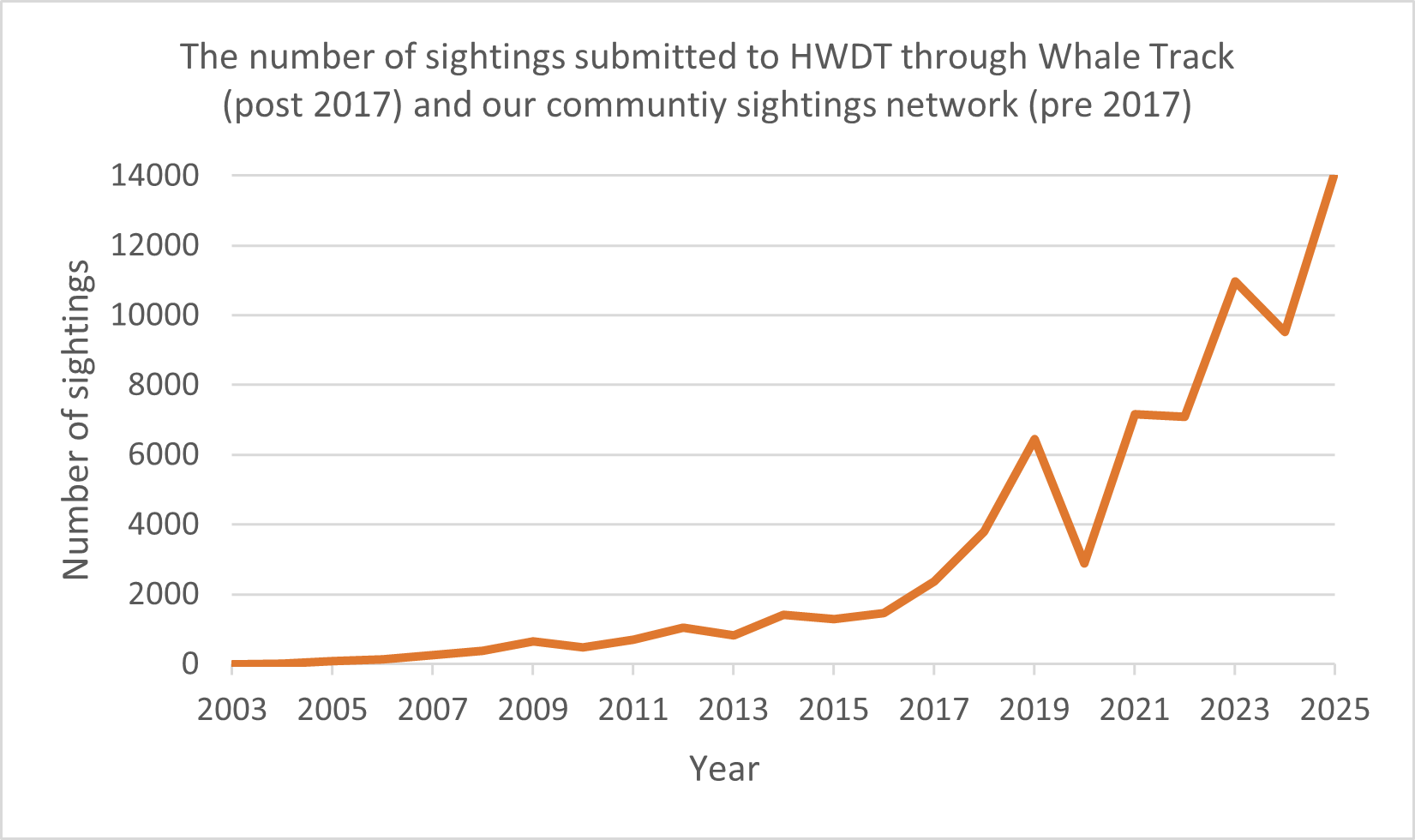
The graph shows a steady increase in sightings from the launch of Whale Track in 2017. Sightings declined in 2020 due to COVID-19, before increased post lockdown. In 2023, after the app upgrade and during increased engagement thanks to funding from Baillie Gifford, sightings once again rapidly increased. In 2024, sightings declined, likely due to the inclement weather conditions (wettest summer on record), before peaking in 2025 with over 14,000 sightings.
SIGHTINGs REPORTS SOAR
Since the launch of Whale Track, the average annual number of active reporters has nearly trebled (184%), with over 1,000 active reporters a year. The total number of sightings increased by 555% generating 63,216 sighting reports, with an average annual increase of 40% and over 10,000 reports being submitted each year. Of these, almost half (41%) were from effort-based surveys (at-sea excursions and land-based watches) and 4% included photographs.
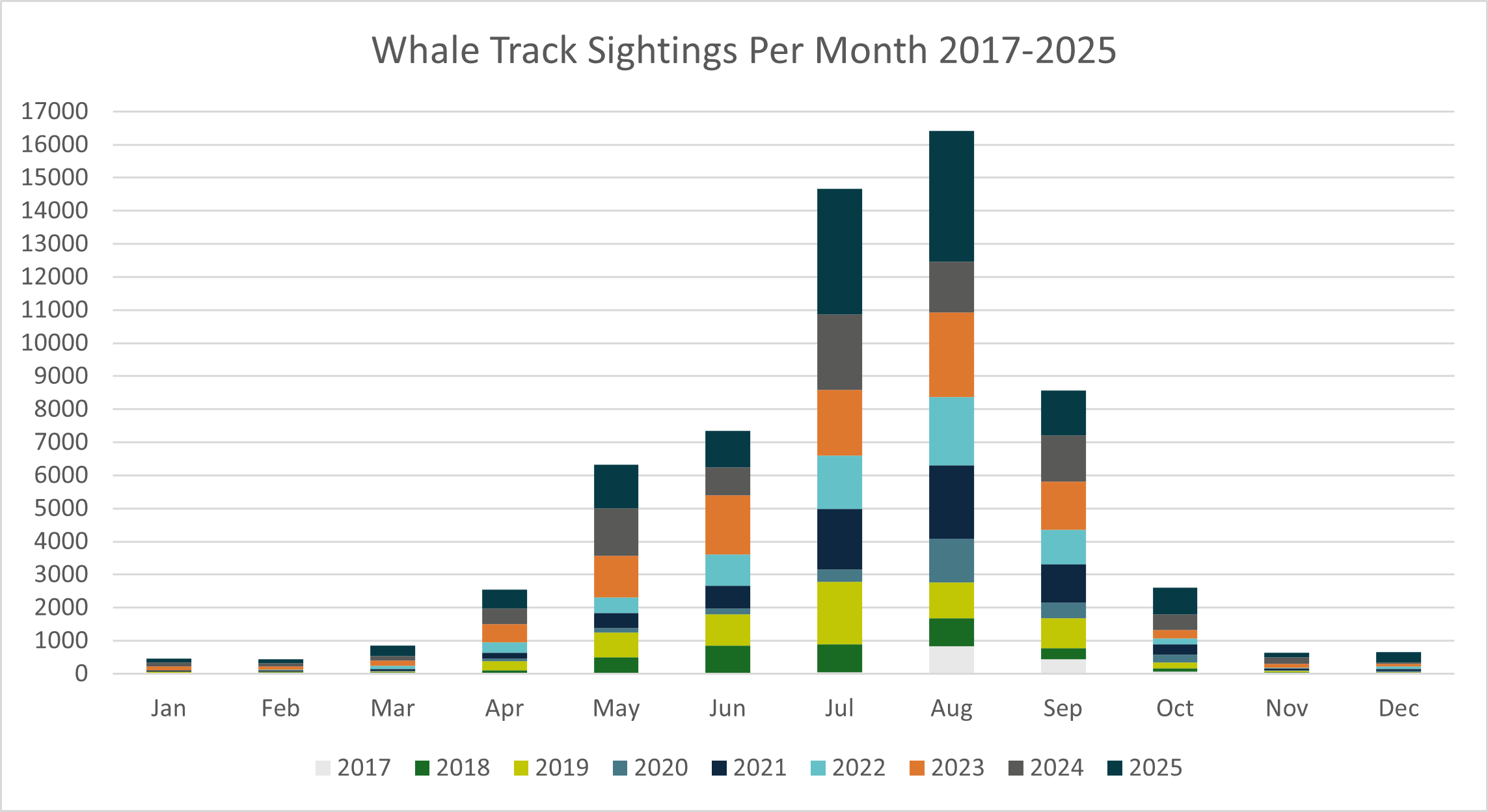
Sightings by month have shown a positive change since 2023, with winter watching campaigns over the past 3 years encouraging year-round reporting, winter (Oct-Mar) reports have increased on average 67% since 2023.
“Our Whale Track community is incredible. Thanks to thousands of people submitting sightings, conducting surveys and sending in photographs, our understanding of the whales in our waters continues to increase, enabling better advocacy for protection. ”
THE IMPACT
Data collected through our community sightings network over the years has been used to help track known individuals, identify areas of site fidelity, monitor rarer species, track trends and changes, uncover new discoveries and even set European records.
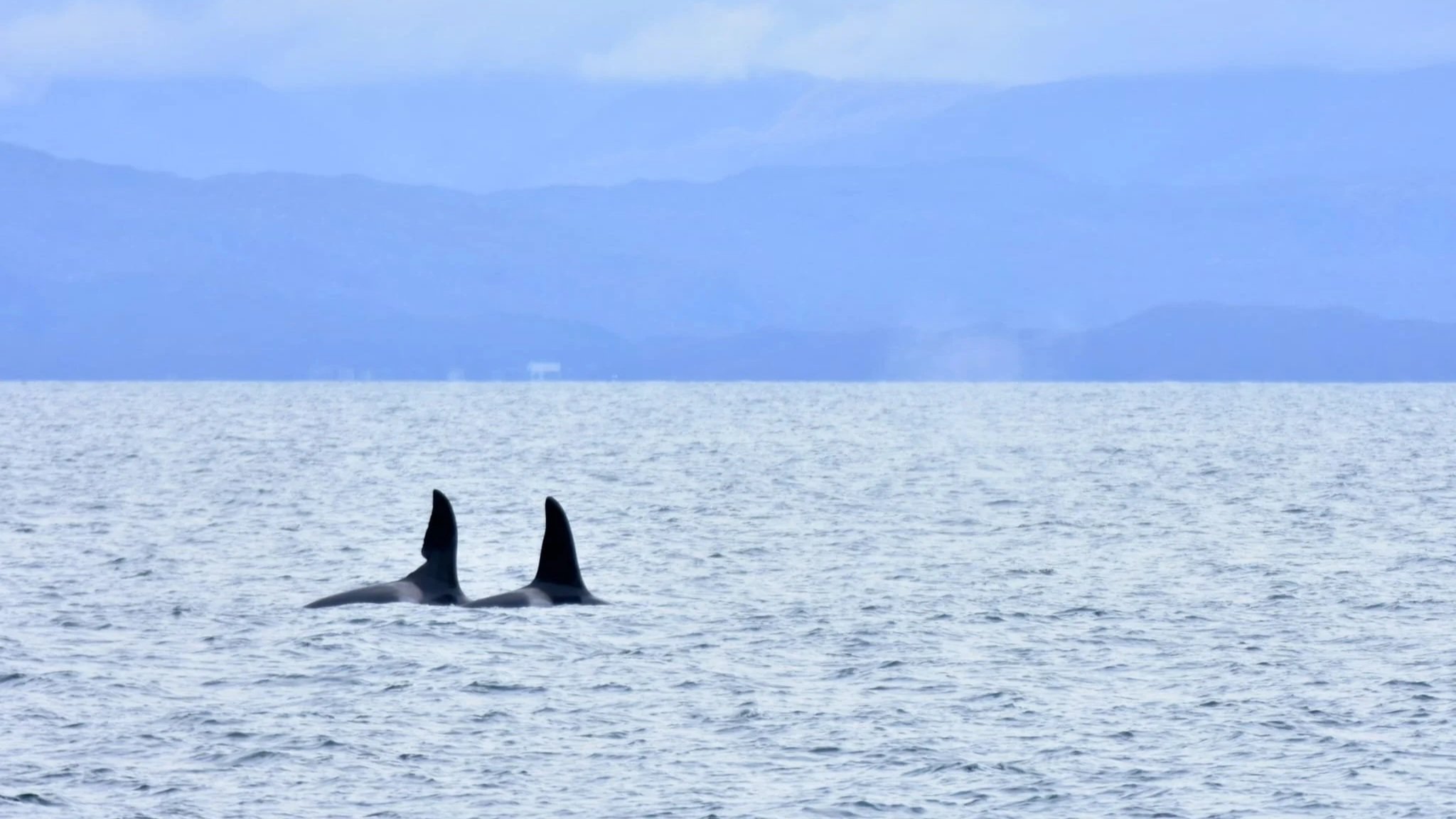
Tracking individuals
HWDT has been monitoring the West Coast Community of killer whales since the 1980s. This vulnerable group once numbered 10 individuals, but a combination of PCB contamination and inbreeding has resulted in, what is believed to be, there only being two remaining members left.
©Indy Greene, Hebrides Cruises
Site fidelity
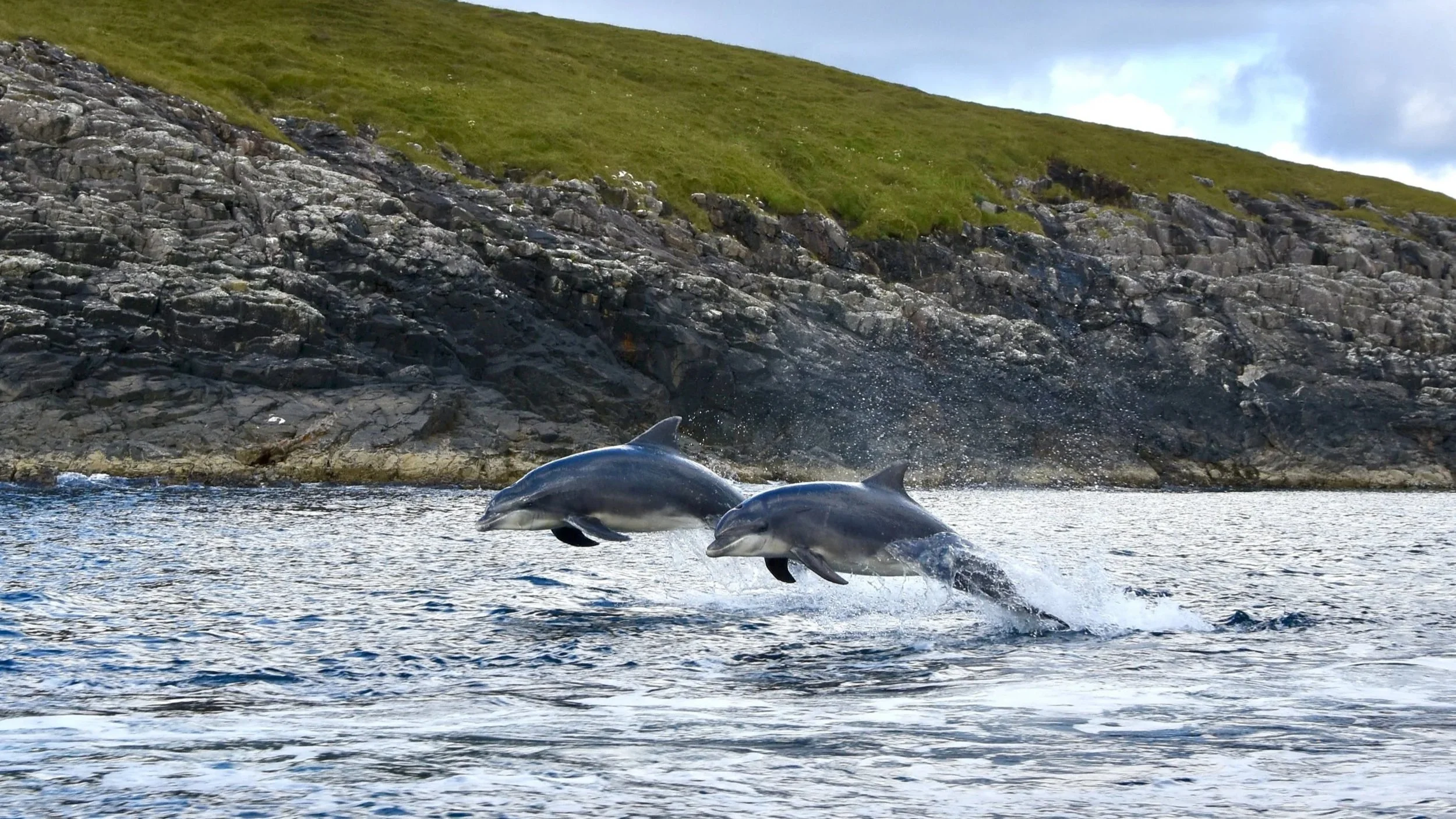
Community sightings data and photographs were used alongside other data sources in the PhD study by Dr Nienke van Geel in 2016, which evidenced the small population of bottlenose dolphins seen around Barra showed site fidelity, never being seen away from the Southern Outer Hebrides.
©Nick Lansberry
Monitoring rarer species
Data collected by HWDT’s Whale Track sightings community 2019-2023 shows a predictable occurrence of northern bottlenose whale sightings in Scottish inshore waters in late summer, early autumn.
©Samantha Somers
Tracking trends and changes
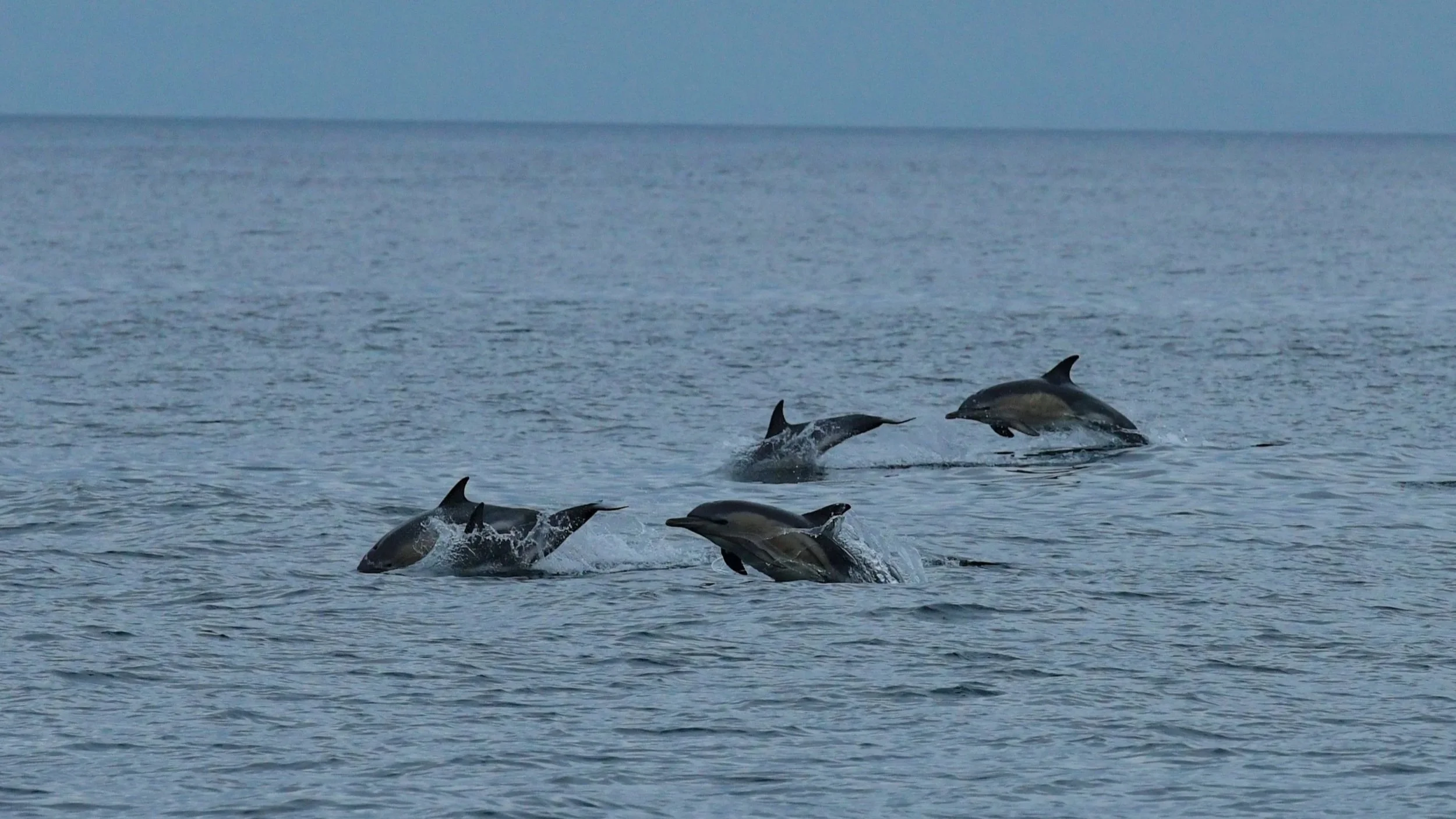
Community sightings and data collected aboard Silurian, show that sightings of common dolphins have been increasing over the last 15 years. In 2025, for the very first time, common dolphins had the highest number of sightings from both Silurian and Whale Track.
New discoveries
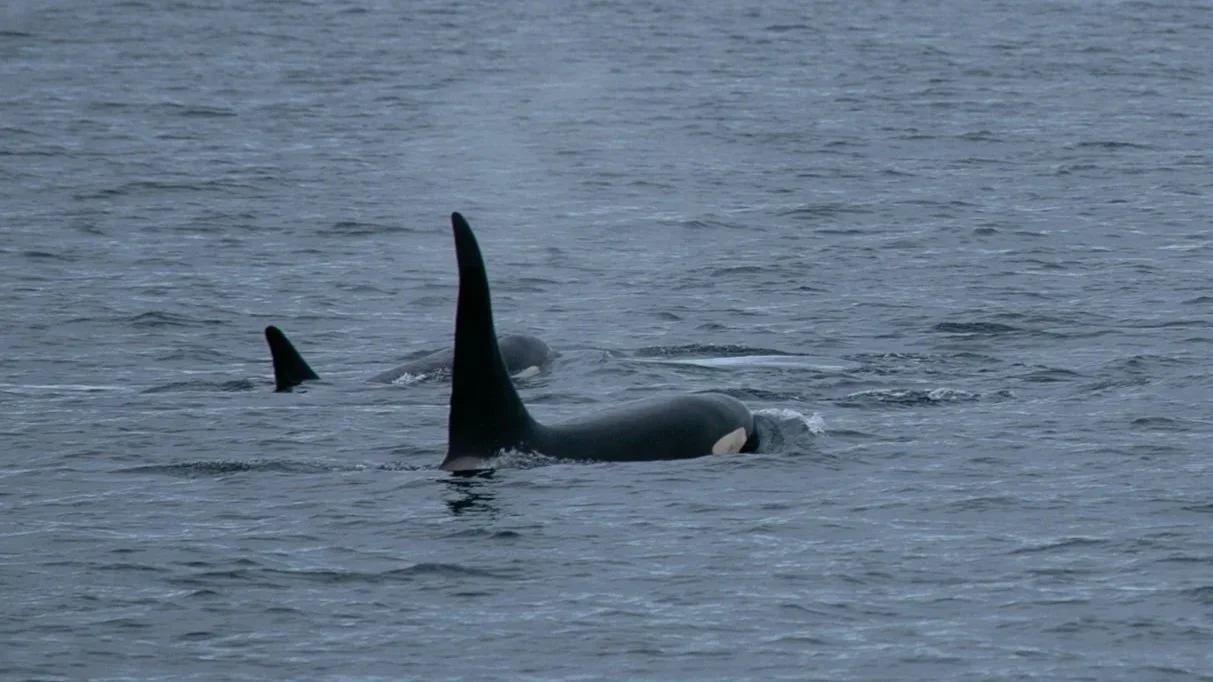
An unknown pod of killer whales first seen from Silurian off Vatersay in 2018, became the first ever match of killer whales between Scotland and Norway. The last confirmed sighting of this mystery pod was from Skye in 2022, thanks to reports and photographs submitted to Whale Track.
©Sara Frost
European record
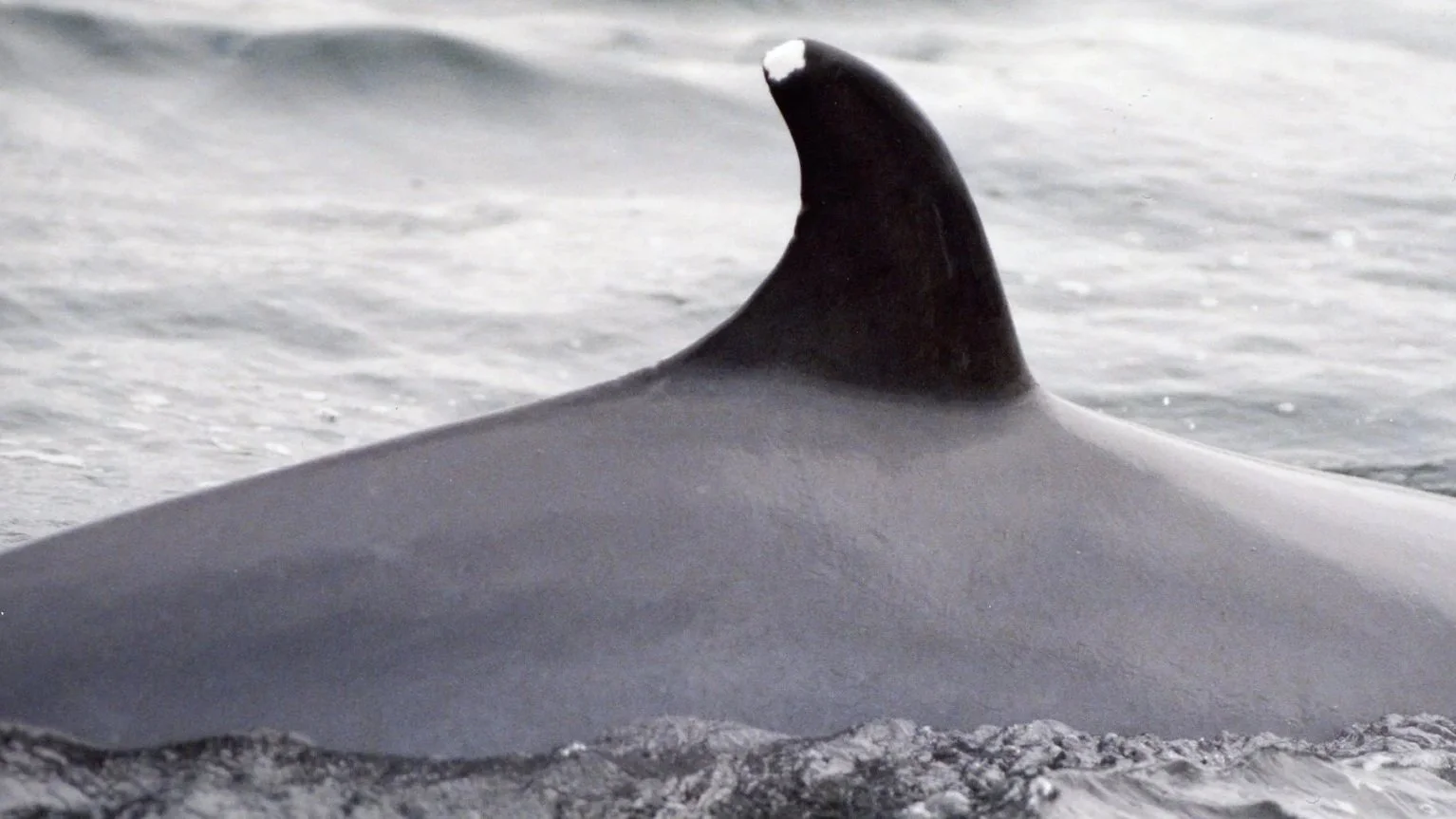
Our minke whale Photo-ID catalogue brings together records submitted by members of the public over three decades. With more than 300 individuals identified and 33% seen more than once, including Snowy who has visited the region over an astonishing 27-year period – the longest known history of sightings for this species in Europe.
These findings demonstrate that Whale Track provides important insights into species occurrence and behaviour, strengthening long-term, large-scale monitoring of cetaceans and playing a crucial role in conservation and management strategies.
Without the support of thousands of citizen scientists throughout the years, our knowledge of the whales in our waters would not be where it is today. We want to thank our dedicated Whale Track community and everyone who has supported our monitoring work over the years.
Become part of this long-term community-based monitoring project, by downloading the free Whale Track app and reporting your sightings.
Whale Track is supported by The Q Charitable Trust, Baillie Gifford, donors to the 2024 Big Give Green Match Fund, Heritage Lottery Fund and the Nature Restoration Fund, facilitated by the Scottish Marine Environmental Enhancement Fund, and managed by NatureScot.