
Epic Autumn Encounters: Whale Track Summary
As we approach the end of the year, we’re reflecting on some of the epic sightings submitted this autumn.
With the excitement of summer behind us, autumn brought with it a quieter few months of sightings, but no less special, with some incredible encounters had by many.
This autumn, our amazing Whale Track community once again surpassed autumn 2024, with a 10% increase in excursions and casual sightings and 26% percent increase in photographs compared to this time last year.
188 excursions
79 land-based surveys
1392 casual sightings
111 photographs
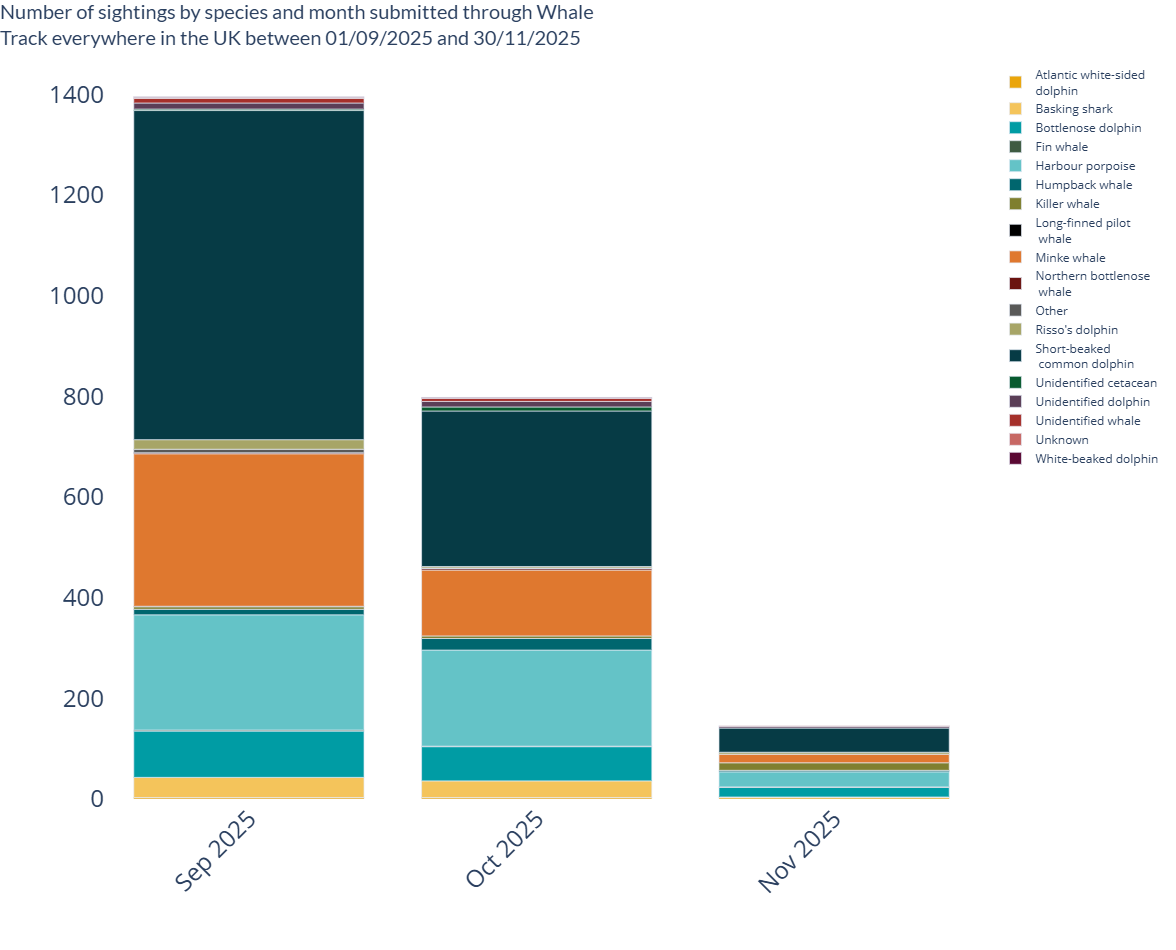
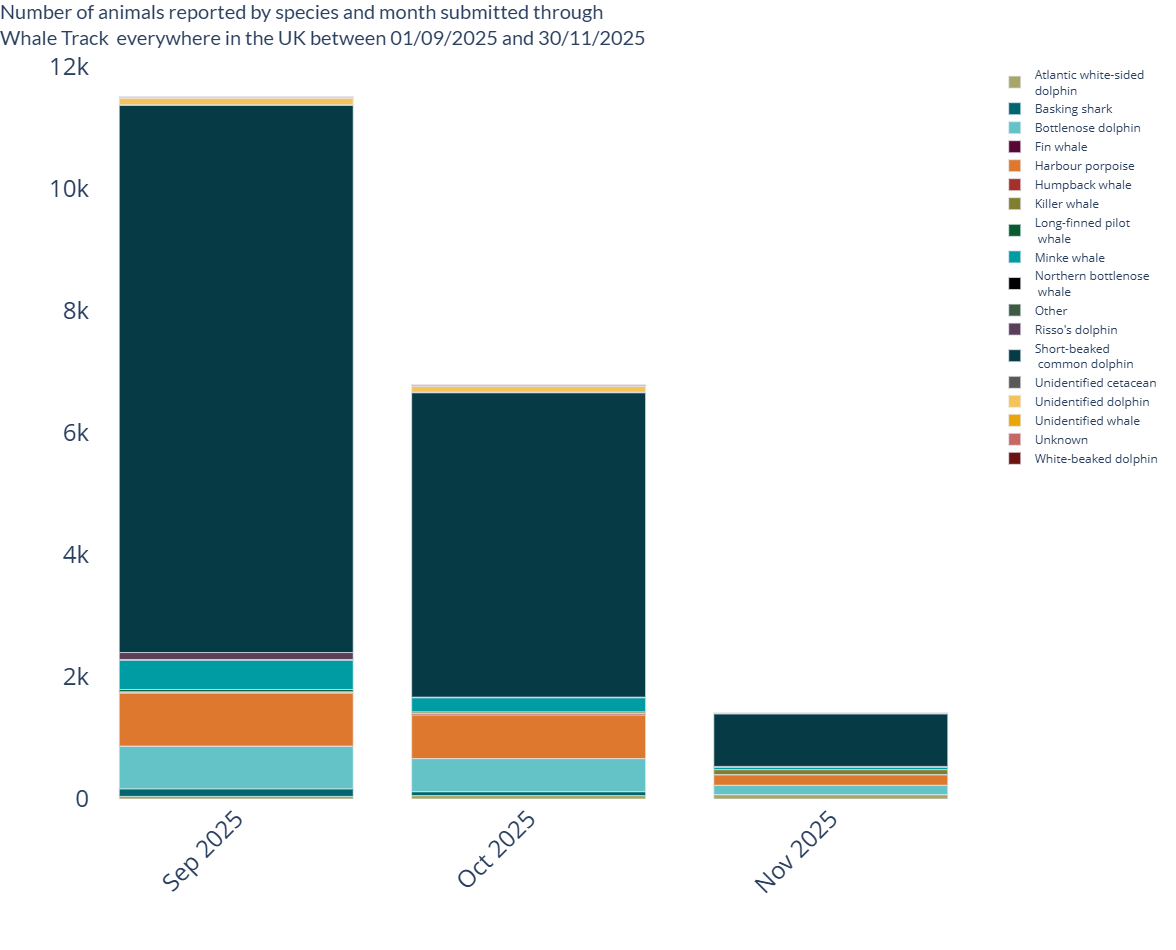
Resulting in a total of 2,338 sightings of almost 20,000 animals from 13 different species.
*This data has not been analysed or corrected for effort.
HUNGRY HUMPBACK
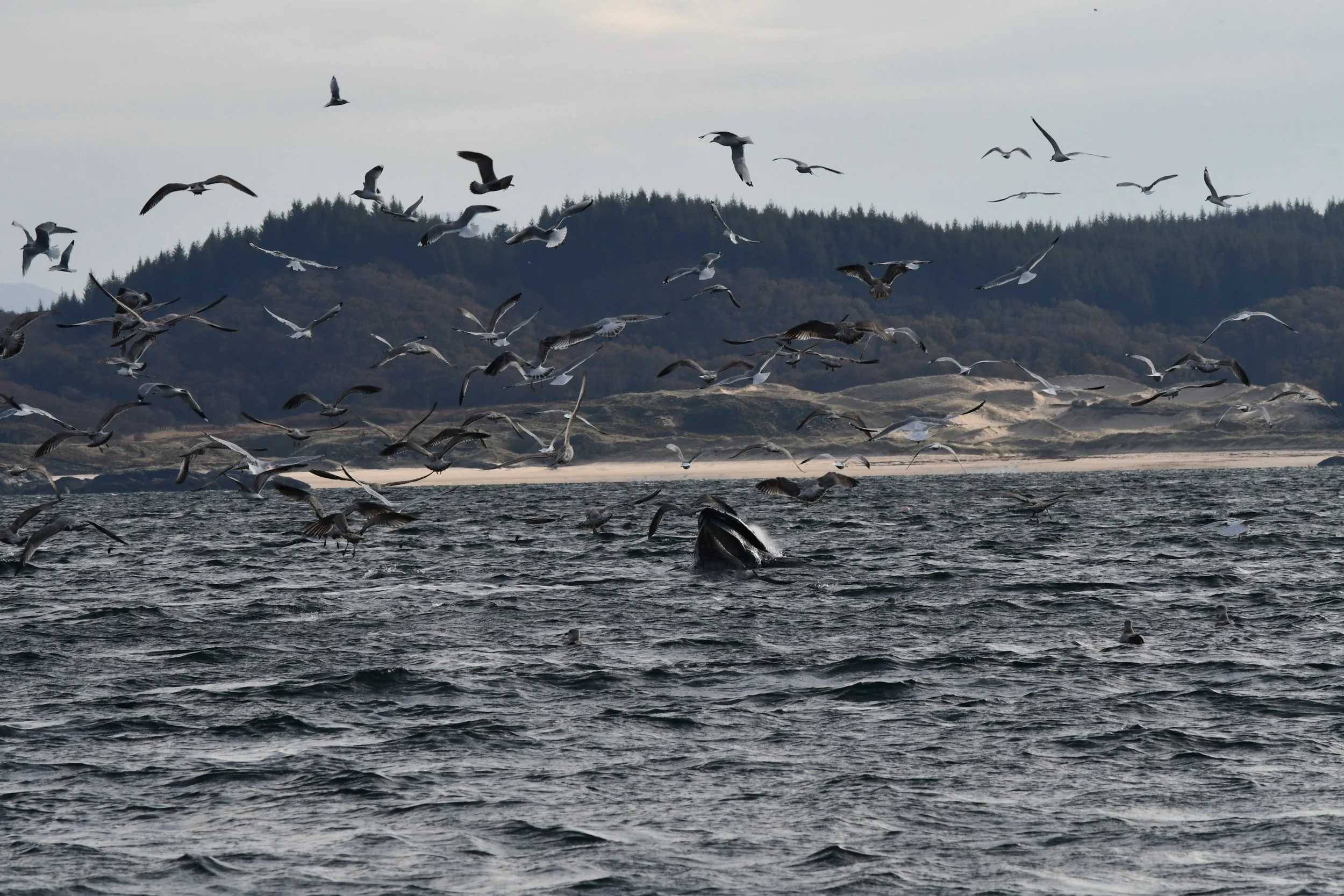
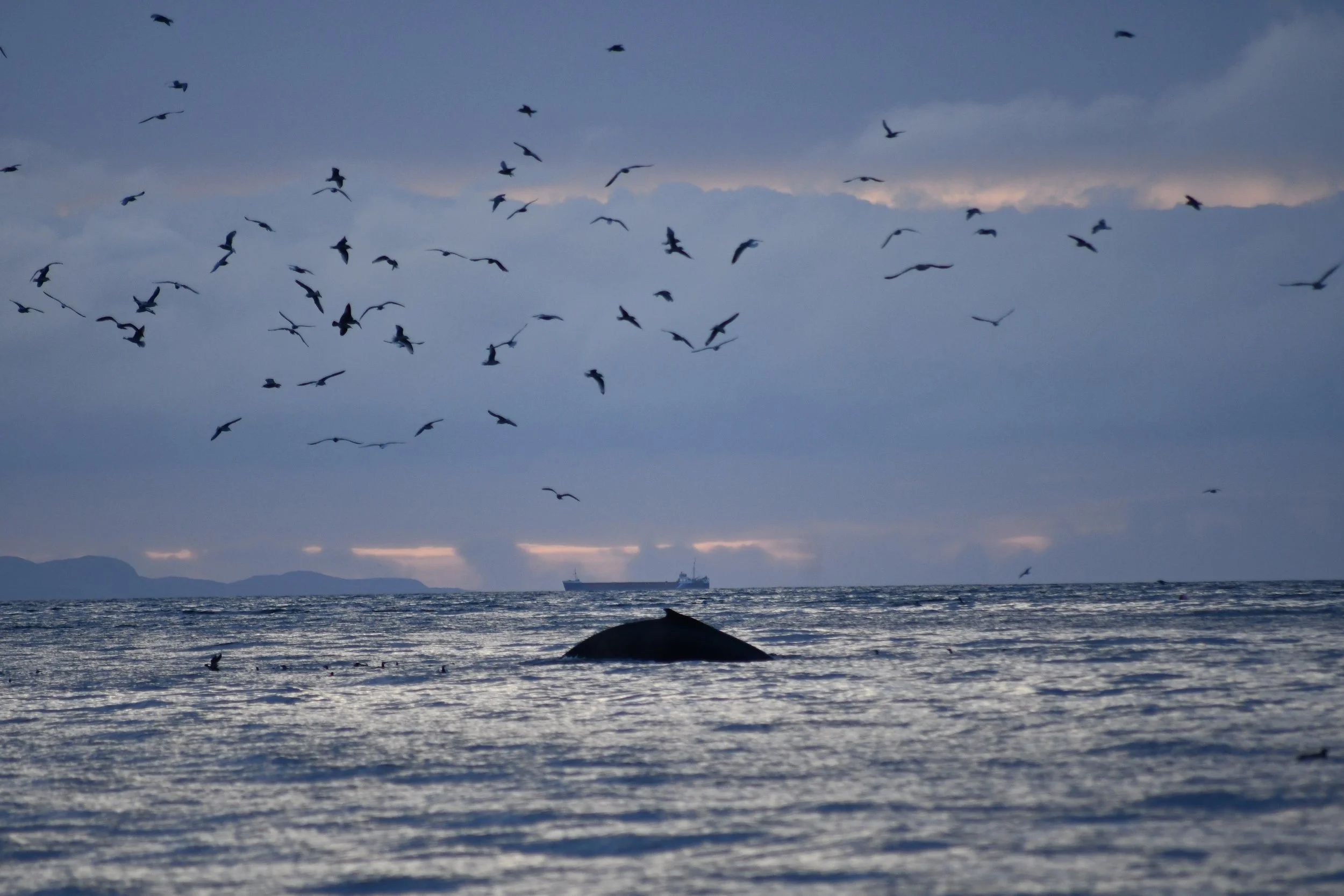
For a few weeks throughout October and November, a humpback whale treated observers with some breathtaking displays of lunge feeding behaviour just south of Arisaig. The Stevens Family were lucky enough to be watching from land for over 4 hours and shared this encounter in the comments.
“We observed the Humpback at the surface on at least 8 occasions over a 4 hour period from the point marked on the map and from between Glenuig and Roshven. There were flock of >100 gulls feeding during this time, plus multiple Minkie Whales, 4 pods of Common Dolphins, and Harbour Porpoises. Quite an epic day of sightings.”
Matthew Waterston reported the humpback on multiple occasions, sharing beautiful photographs and an incredible video of the humpback whale lunge feeding, showcasing how special a sighting so many were lucky enough to enjoy.
©Matthew Waterston
© Matthew Waterston
©Sophie Shields
PORPICIDE IN THE CLYDE
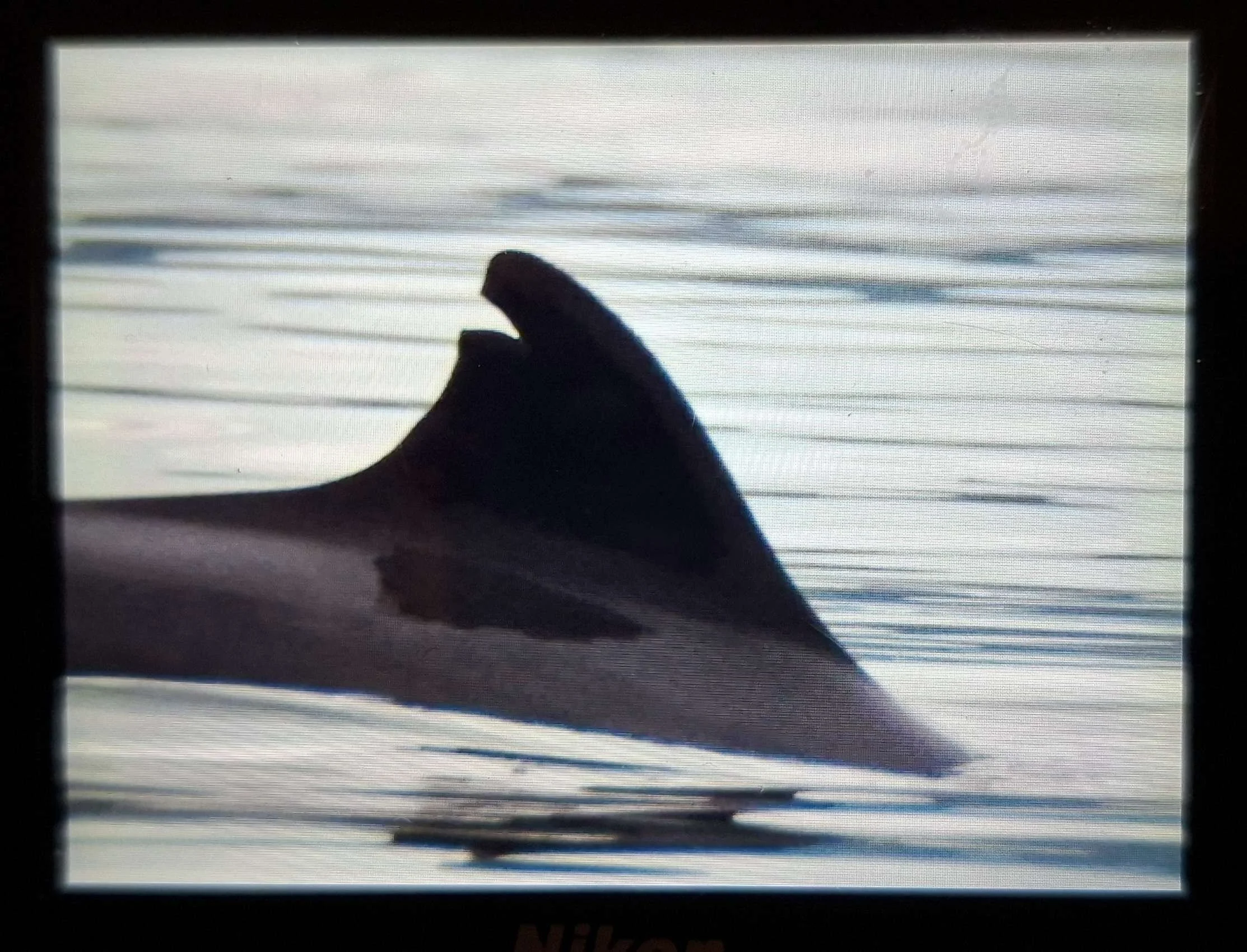
Sophie Shields regularly watches across the Clyde, reporting on the movements and behaviours of the bottlenose dolphin pod which has made the Clyde their home for the past few years.
On several occasions, a behvaviour known as ‘porpocide’ has been witnessed. Porpocide is a behvaiour in which bottlenose dolphins attack porpoises, causing significant damage and in a lot of cases death. It is not fully understood why they do this, but there are many theories, some more plausible than others, from competition over food (unlikely as there is little prey overlap) to hunting, fighting or infanticide practice. More research is needed to fully understand this behaviour.
In November, Sophie was watching the bottlenose dolphin pod when she witnessed them attacking a porpoise. Luckily, the porpoise managed to get away, but not without, what Sophie suspects might be, a lasting mark of this attack, as she photographed the porpoise which has a very distinct slice through the tip of its dorsal fin.
BASKING SHARKS IN NAIRN
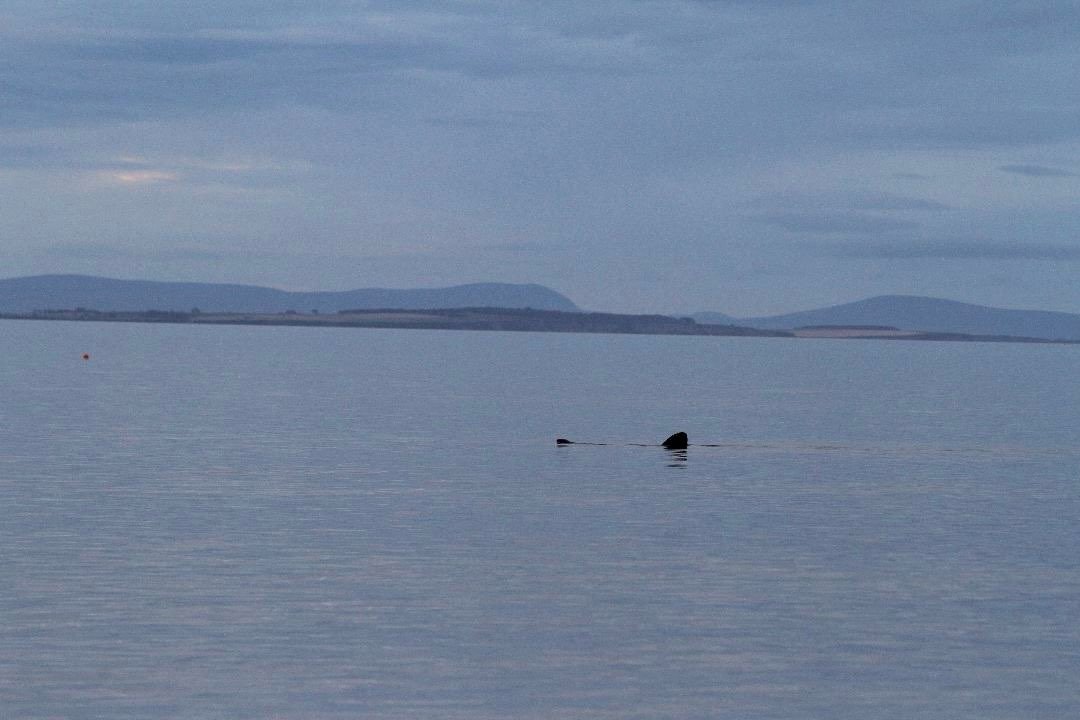
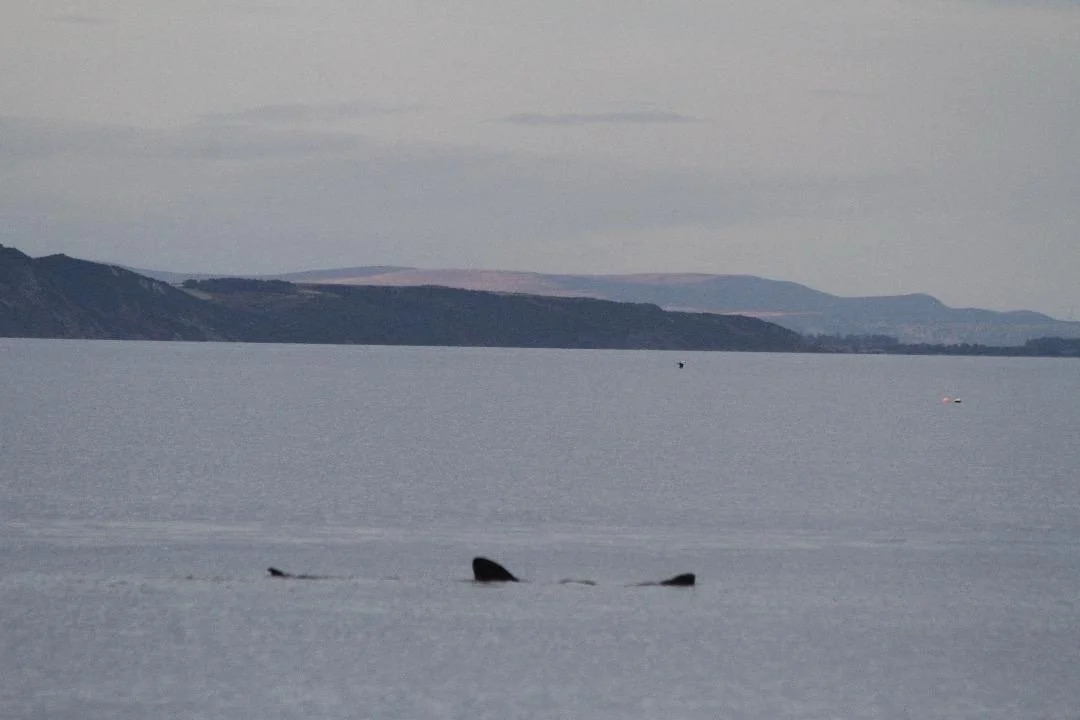
Reports of basking sharks have gone up this year compared to 2024, though are still lower than 2023. This autumn, watchers in Nairn were treated to sightings of basking sharks throughout September and October. Reporter, Porpoise, witnessed multiple breaches from different individuals, as well as nose to tail swimming, a possible sign of courtship behaviour. While Amber captured these images of a basking shark, with the calm conditions allowing for their nose, dorsal fin and tail all being visible above the surface.
©Amber Coram
JOHN COE & AQUARIUS
After the roller coaster that has been 2025 when it comes to these two killer whales, I wanted to finish this last sighting report of the year with the news that John Coe and Aquarius have been reported this autumn. After the confirmation that they were together again in Hebridean Seas in September, they were sighted of the east coast heading towards Fraserburgh in October. Thanks to our east coast reporters for keeping track of their movements and sending in photographs.
Our most recent reports of the pair came in on 22 November from Anthony Rigell and Sylvia Porter, confirming they were seen off Camus Mor, Skye. Anthony Rigell captured this beautiful video of the boys, after spotting them while driving.
#EMBRACE YOUR WHALED SIDE CHALLENGE
Our #EmbraceYourWhaledSide challenge is back this winter.
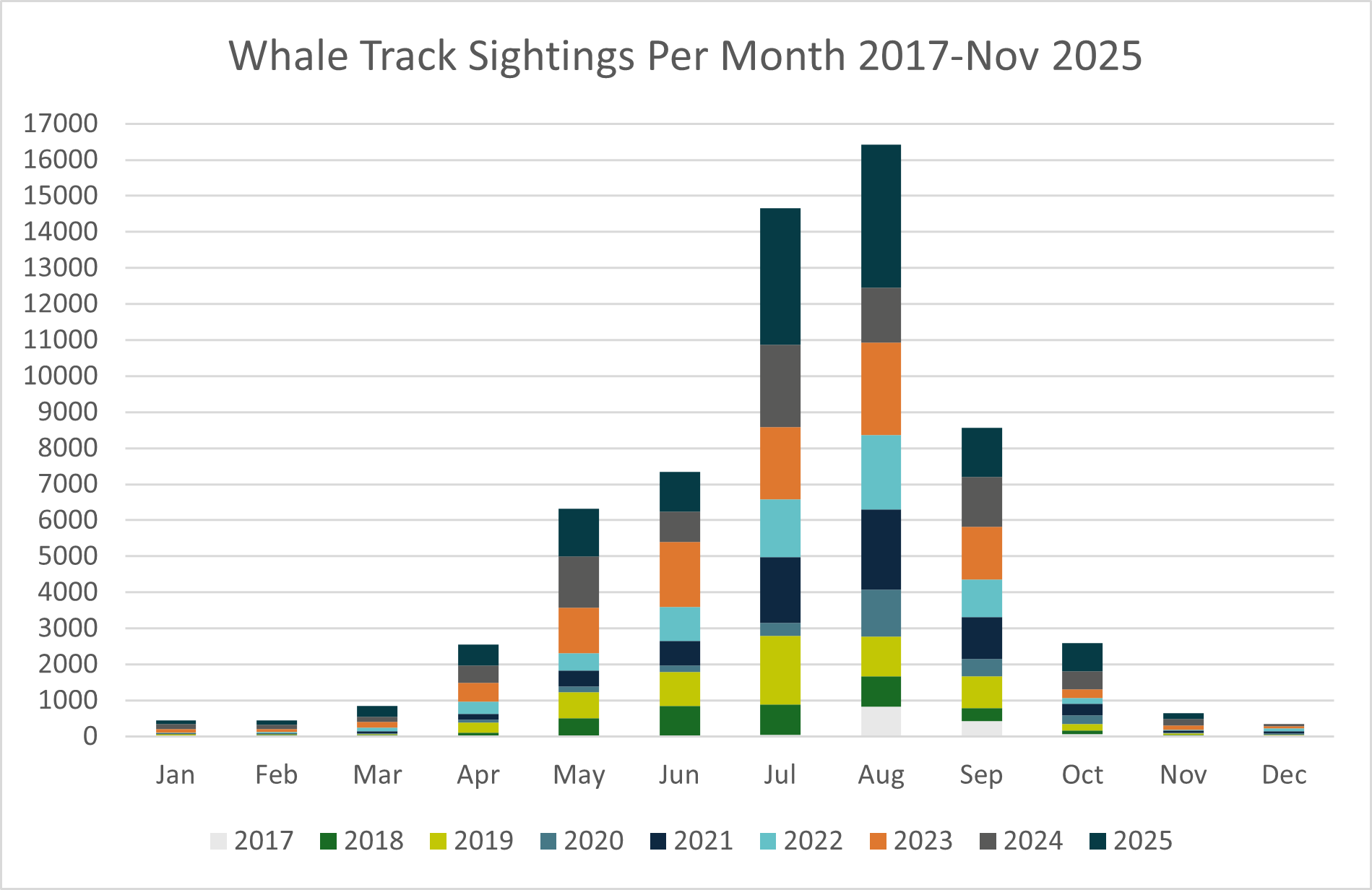
With an increase in reports this autumn compared to previous years, we are eager to continue the momentum into the winter months. The more data we can collect throughout the year, the more of an understanding we’ll have of the presence and absence of species in our seas year-round.
As you can see from the graph, the number of reports greatly reduce throughout the winter months, which is understandable as there are fewer species in our seas during this period. However, there are also less people on, and watching, the water. So, this winter, we are challenging everyone to don their raincoats and woolly hats and do an effort-based watch from land, even a 30-minute watch can provide vital data for an area. Or why not record your next ferry trip as an excursion?
Check out our wonders of winter watching blog to find out why winter watching is so important and get inspired to take part in our #EmbraceYourWhaledSide challenge.
Share your winter watch photographs with us and inspire others to do the same by tagging #EmbraceYourWhaledSide and @HWDT on Facebook or @HWDT_org on Instagram.
Thank you to our wonderful Whale Track community for sending in all your sightings and helping us continue to learn more about the whales in our waters.